hiringcycle.ai
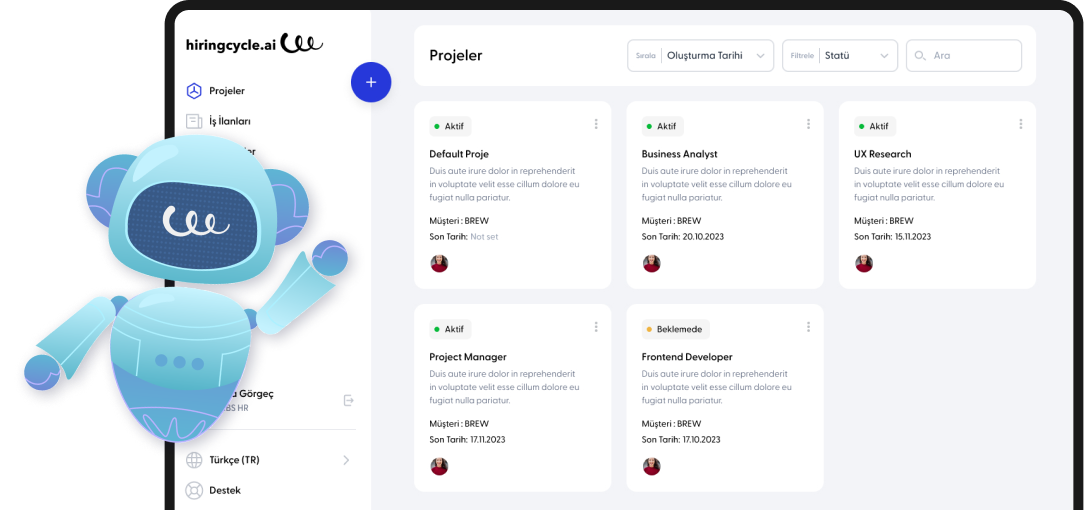
About the Project
The product was shaped to help HR teams use their time where judgement matters, support candidate evaluation, and keep the process consistent and traceable, from job definition through to shortlist.
Expertise
Team
2 * UX Designer
2 * UI Designer
4 * Front-End Developer
1 * Backend-End Developer
1 * Project Manager
2 * QA Engineer
Tech
React
Remix
NestJS
Typescript
Vitest
GraphQL
LLM Models
Storybook
Figma
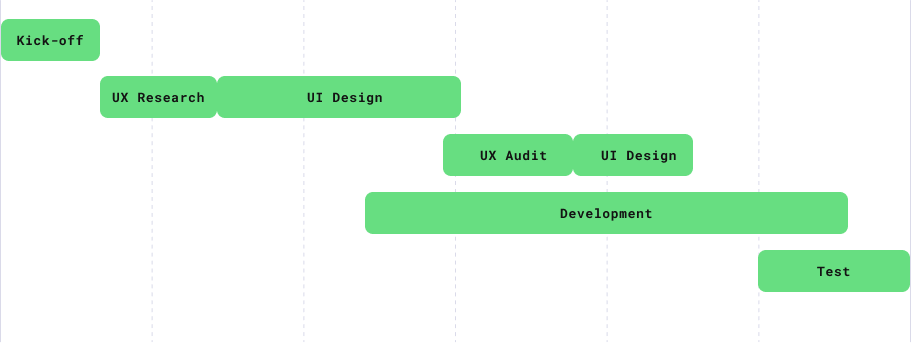
Project Timeline
~6 Months

Segment
Recruitment Group Manager

Segment
Head of HR

Segment
Recruitment Specialist

Segment
Strategic Director

Solutions & Key Features
“In line with the needs of HR managers, we designed a dashboard to save time in the hiring process and simplify the assessment of candidates' skills.

Simple Interface
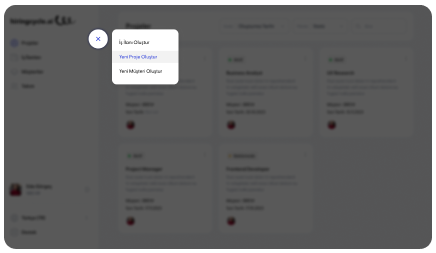
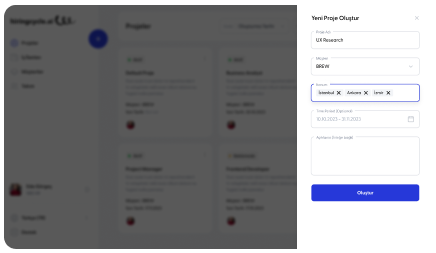
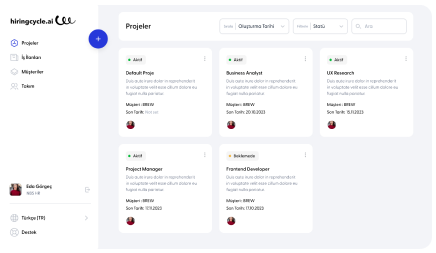
The control panel of hiringcycle.ai offers a clean interface designed according to the needs of HR managers, avoiding information overload. It aims to help HR professionals stay focused and complete their routine tasks quickly, thereby increasing efficiency.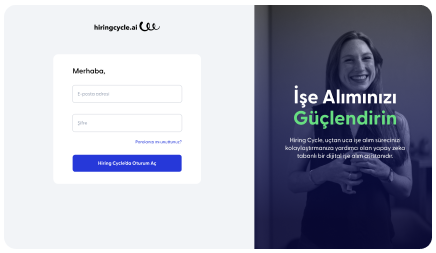
AI-Powered Job Posting
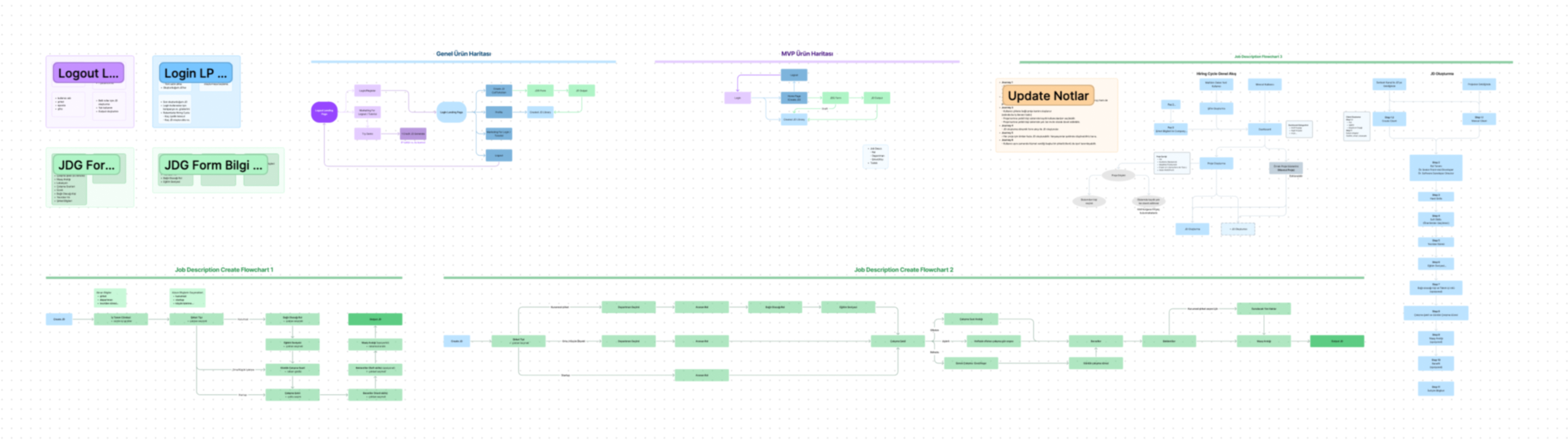
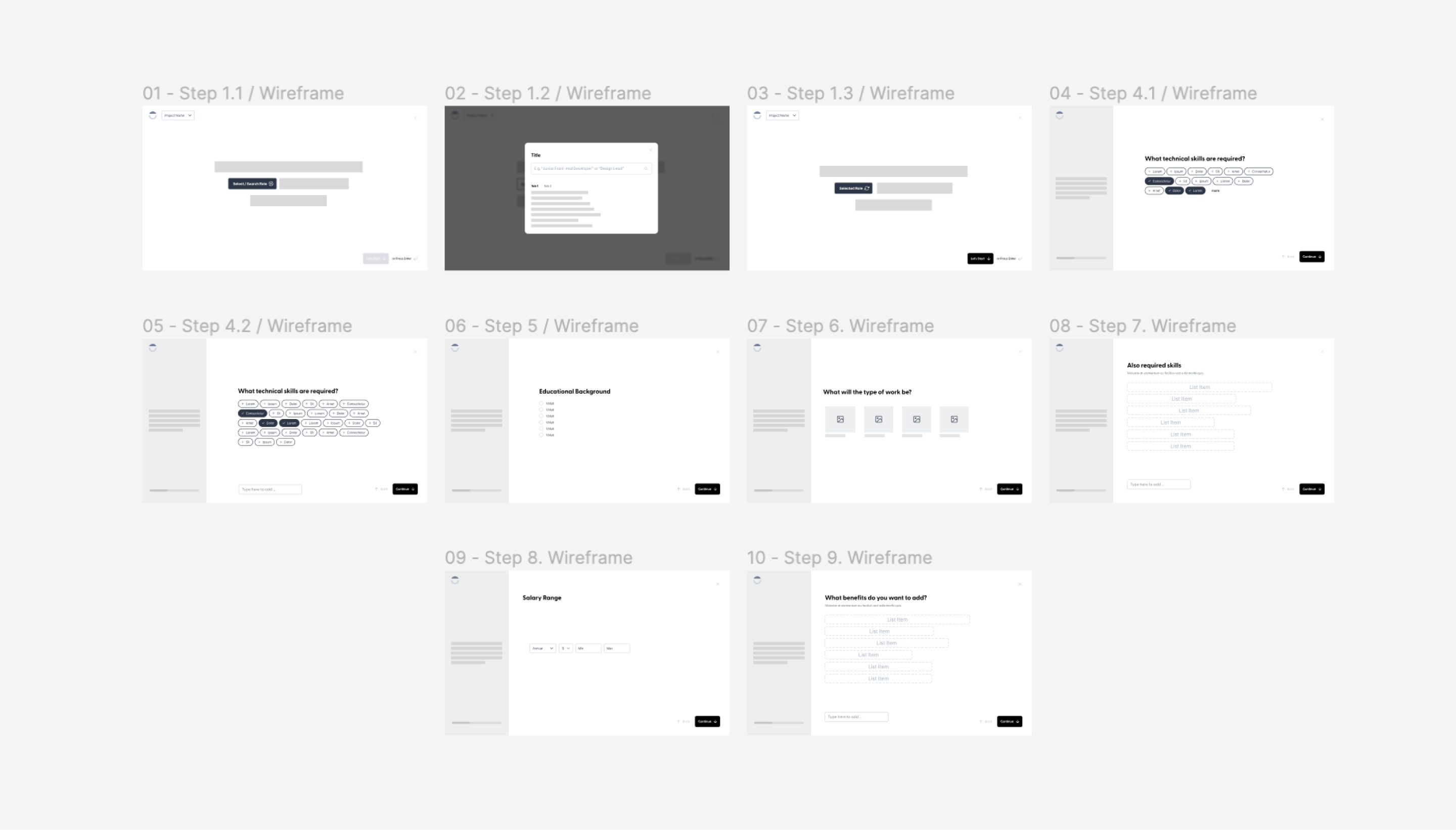
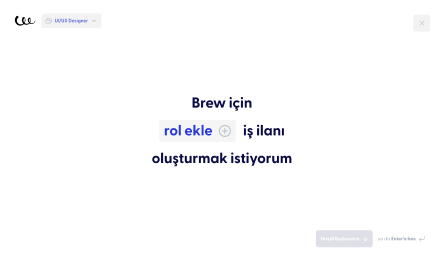
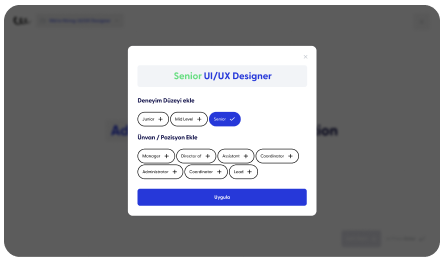
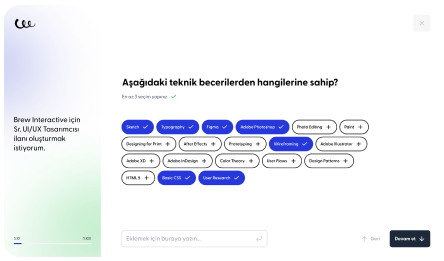
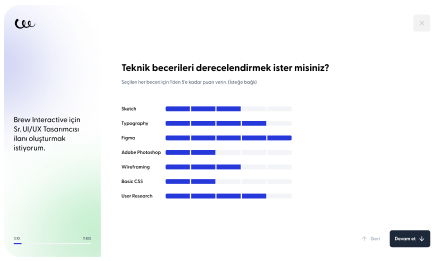
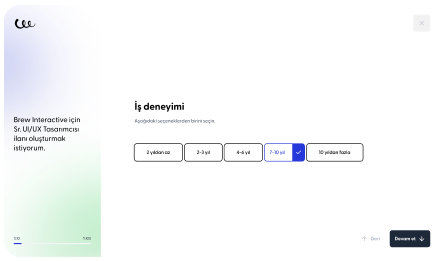
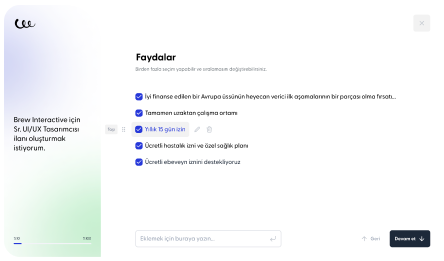
When creating job postings for the project, we analyzed the users' selections for the role they're seeking with AI and provided suggestions on how to craft the most suitable posting.The AI turned the HR professional’s selections into text appropriate for the employer, the position, the candidate, and the platform where it will be posted. This sped up the process and ensured the job posting was tailored to the target audience.
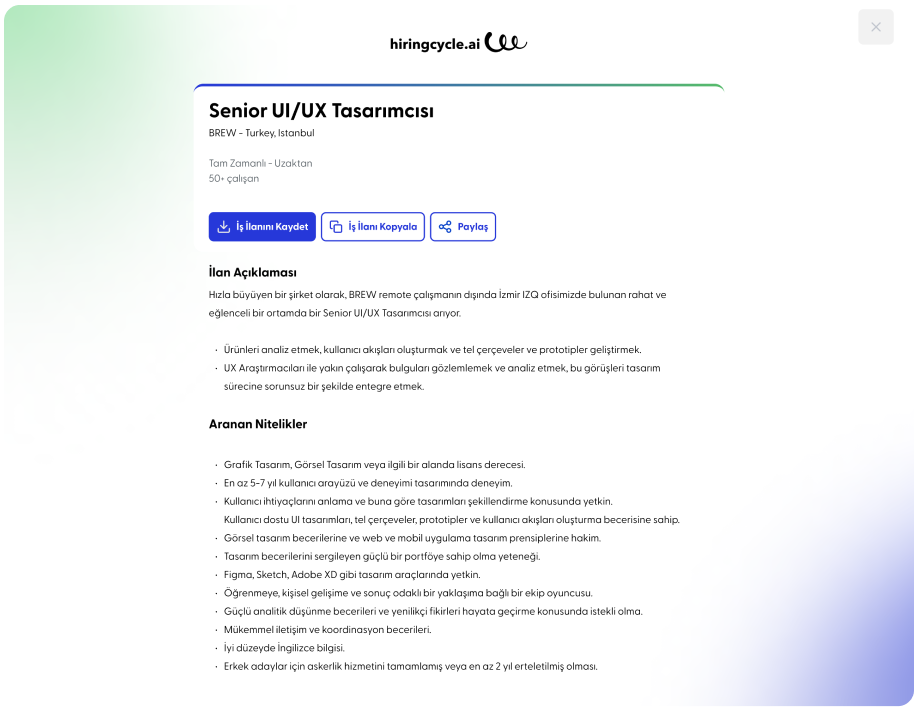
Video Interview UX Analysis
Our goal was to provide a seamless interview experience in one-way online video interviews, ensuring that candidates—regardless of their experience level—do not experience extra stress. This experience was crucial as it allowed candidates to focus on the interview process, which in turn significantly influenced their application journey and outcomes.
We aimed to measure the effectiveness of our work through increased video interview participation rates and user satisfaction surveys.
User Interview
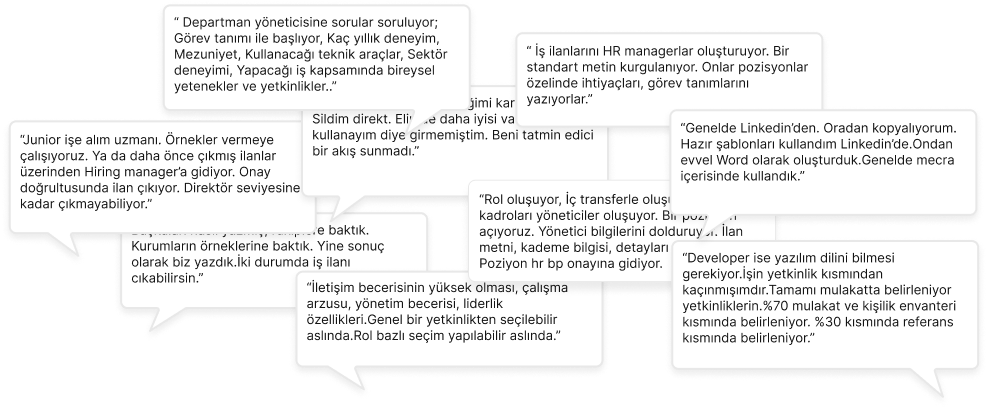
First, we created a set of questions, focusing on the goals of our discussion and the specific points we wanted to address. Ensuring the questions were open-ended and supplemented with follow-up questions like "Why?" and "How?" was a key aspect of our approach.
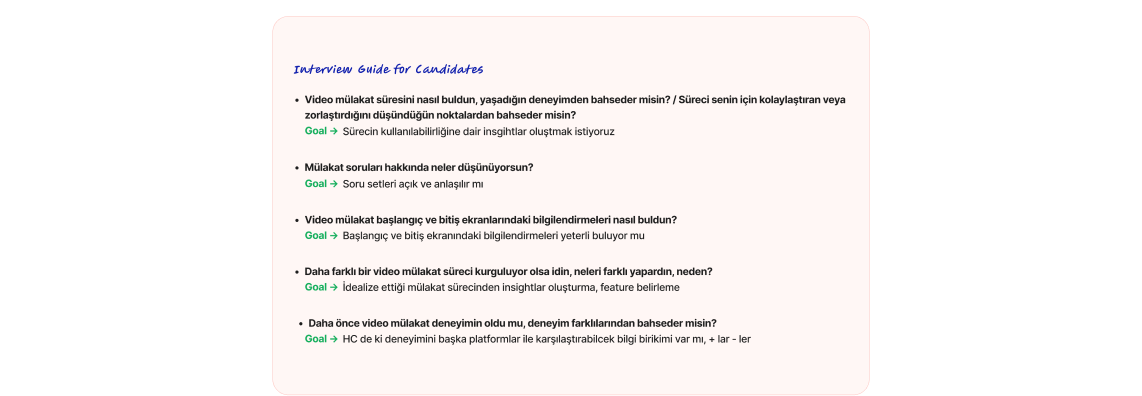 We collected the outputs from these interviews on our findings board and organized them into groups based on related topics.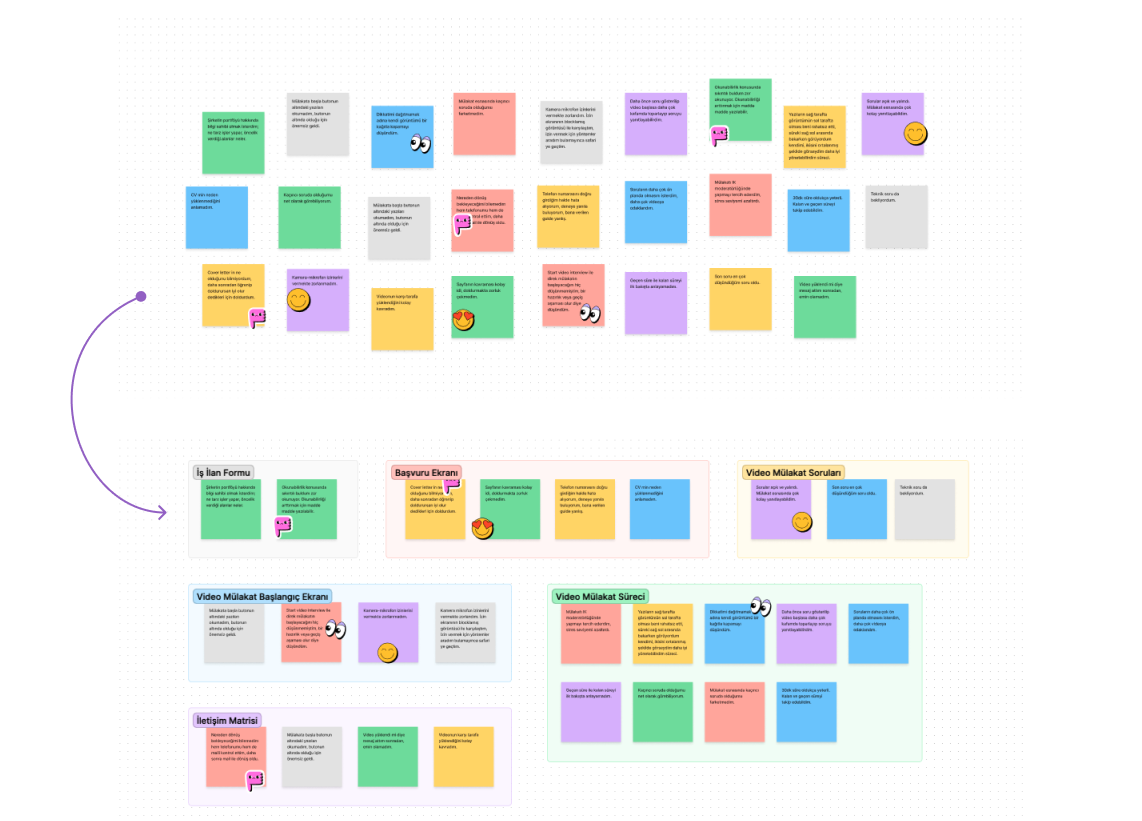
User Behavior Analytics
At the heart of our UX process, we listed potential solutions. Considering the project budget and time constraints, we identified the solutions we could implement in the first phase.

Design Outputs
Candidate Video Interview Experience
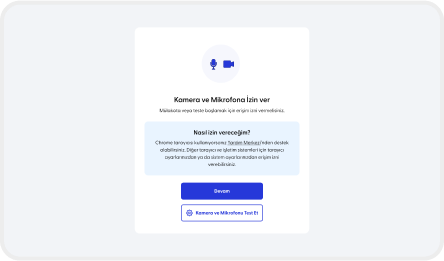
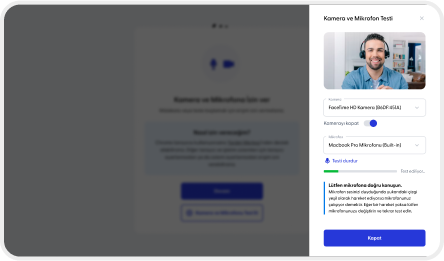
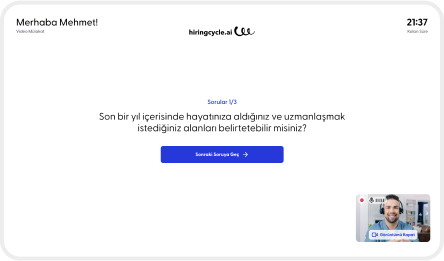
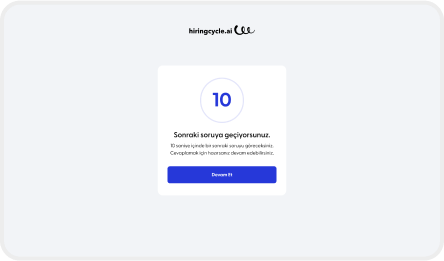
To facilitate the candidate's video interview experience and help them adapt quickly to the process, we designed informative screens. During the interview, seeing their video on the screen made candidates uncomfortable and distracted them from focusing on the questions—reading and understanding them became more difficult. As an additional improvement, we implemented a feature allowing candidates to minimize or even close their video feed as they wish.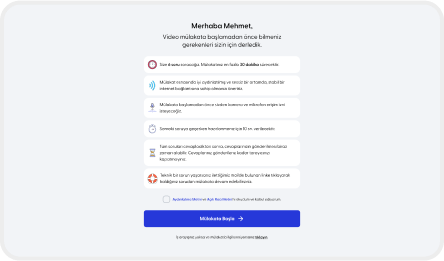
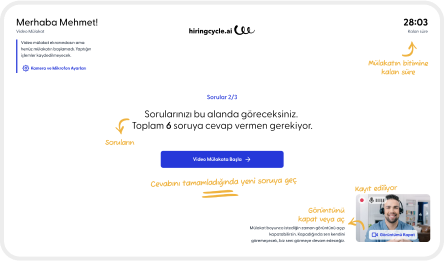
Candidates were struggling to manage their interview time and couldn't find time to prepare for the next question while transitioning from one question to another, increasing their stress levels. To address this, we designed an improvement where candidates can track the remaining interview time.
We also added a short break period between questions to allow candidates to catch their breath and prepare for the next question.
Video Interview Evaluation Process with Artificial Intelligence
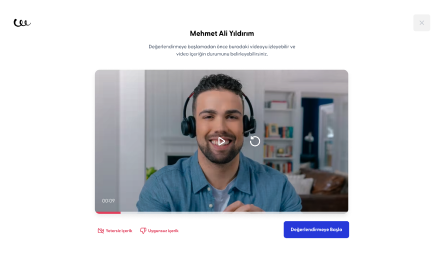
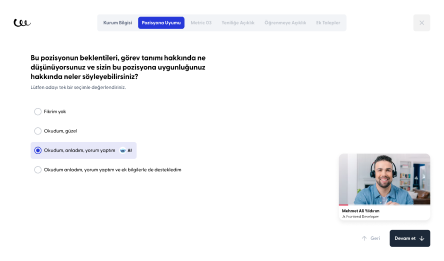
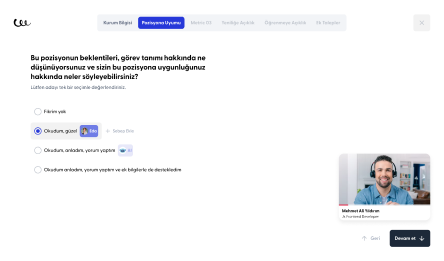
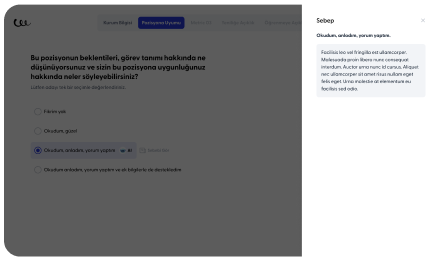
Before HR professionals begin evaluating the interview, we designed a preview stage where they can watch the candidate's video feed. If inappropriate or insufficient content is detected, the HR professional can tag the candidate, exclude them if necessary, or even schedule another interview with the candidate.During the interview evaluation stage, we established a structure where HR professionals can add their comments along with the feedback generated by artificial intelligence regarding the answers.
In the evaluation process, which proceeds in a question-and-answer format, we developed a shortcut for professionals to rewatch the candidate's response to a question if needed.
Authorized HR managers can track the candidate's evaluation process, review the assessments made by HR professionals, and make changes if necessary, ensuring continuity throughout the process.
Process Analysis
We visualized statistical data for all stages of the process starting from sending interview invitations to candidates accepting and attending the interview under the "Overview" section. This allowed HR professionals to quickly grasp the entirety of the project.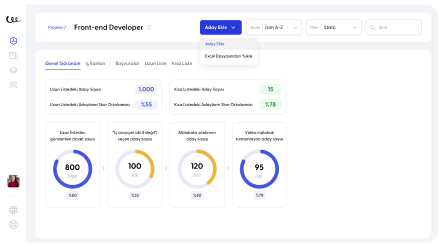
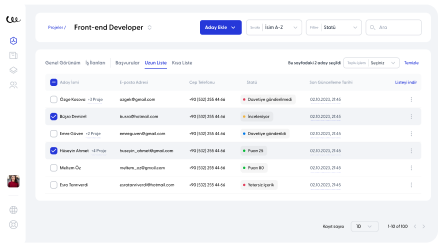
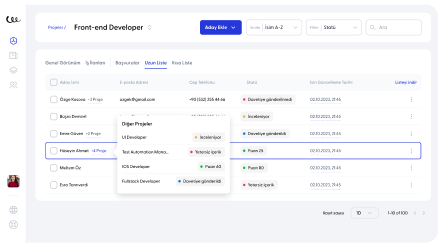
If a candidate applies for multiple open positions and these applications are managed by different professionals for different projects, the status of applications can be tracked from each project screen. This prevents process overlaps.
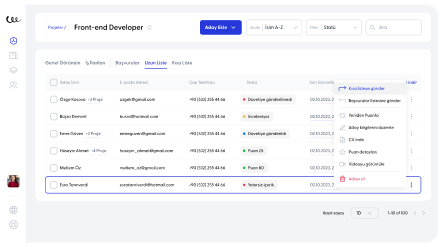
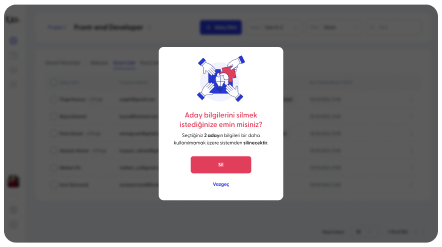
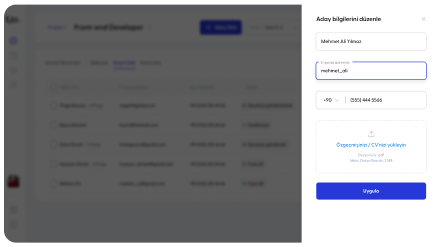
We developed auxiliary functions to easily manage shortlists and longlists. With these functions, users can move any candidate between lists, download their CV, view score details and video recordings, or delete candidates from the system.
Design System
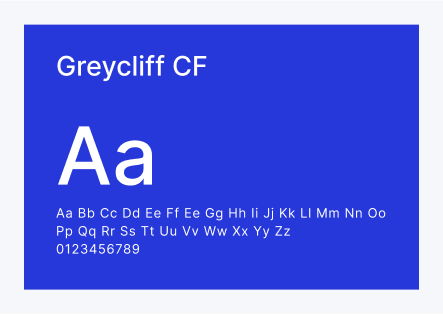
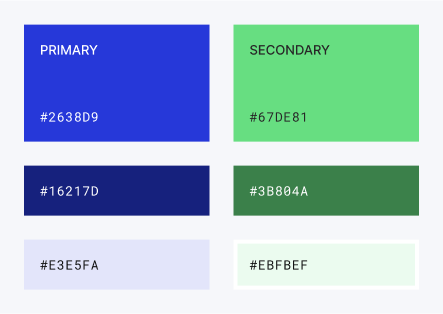
Basic Style Elements
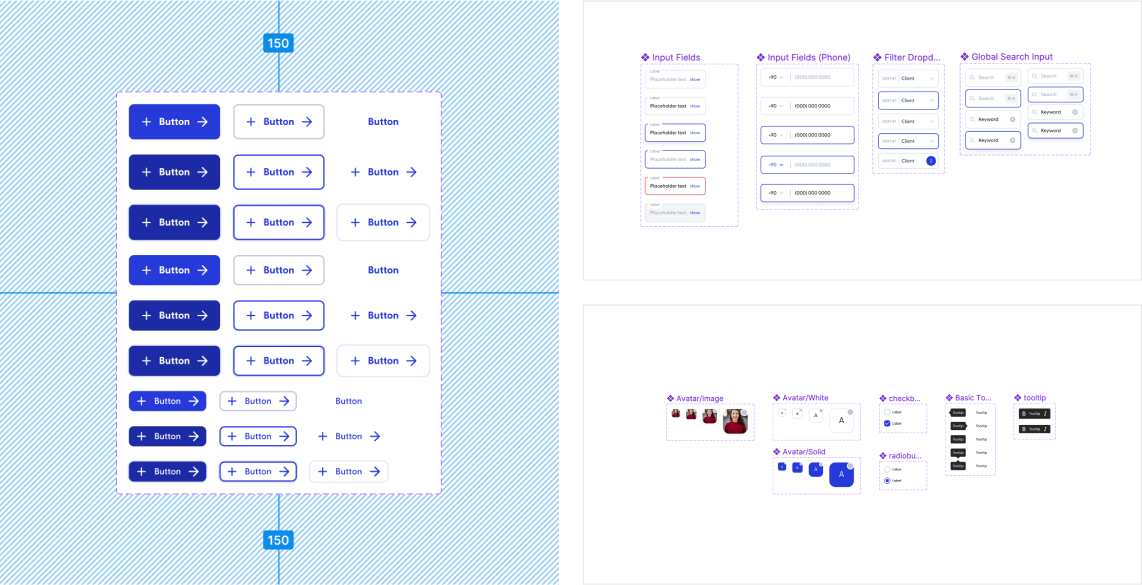
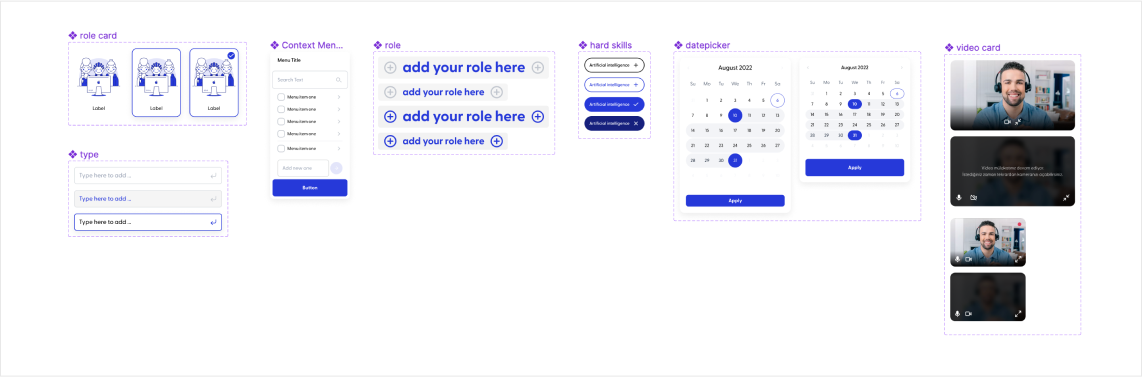
Some fundamental components from the design system file
Development Approach and
Technology Choices
What technologies were used?
We handled both the Frontend and Backend development of the application.For the backend development of the application, we utilized frameworks and technologies such as NestJS, TypeScript, Hasura GraphQL Engine, and PostgreSQL.
For front-end development, we chose the React library and Remix framework. The product experience was designed for different user types, with clear, consistent interfaces that make the workflow easier to follow.
We continuously delivered our applications to users securely using Continuous Integration/Continuous Deployment (CI/CD) pipelines. To make our applications scalable and high-performing, we adopted a container architecture and ran them on Platform as a Service (PaaS). Through containerization, we ensured that our applications and dependencies could be distributed as a single package.
We utilized Natural Language Processing (NLP) models for functions such as job posting creation and video interview evaluation. During intensive R&D and productization processes, we used both commercial and open-source models for data validation and custom model generation purposes. We conducted tasks such as training models in the Turkish language, parameter optimization, and fine-tuning existing models.
How does it work?
The application consists of the following components:AI-Powered Job Posting Creation
The application can create a job posting from start to finish with recommendations made by AI for the desired role.Control Panel
Starting from creating job postings to receiving applications for roles and managing video interview processes, the dashboard used by HR professionals ensures the completion of the hiring journey. During this process, HR personnel can generate available metrics to optimize the hiring processes.Candidate Video Interview Process
Candidates can apply to posted job openings and then quickly progress through the video interview process. Videos are processed and evaluated by artificial intelligence, and candidates are scored on various metrics.These components together efficiently manage processes from creating job postings to evaluating candidates, providing a seamless hiring experience.

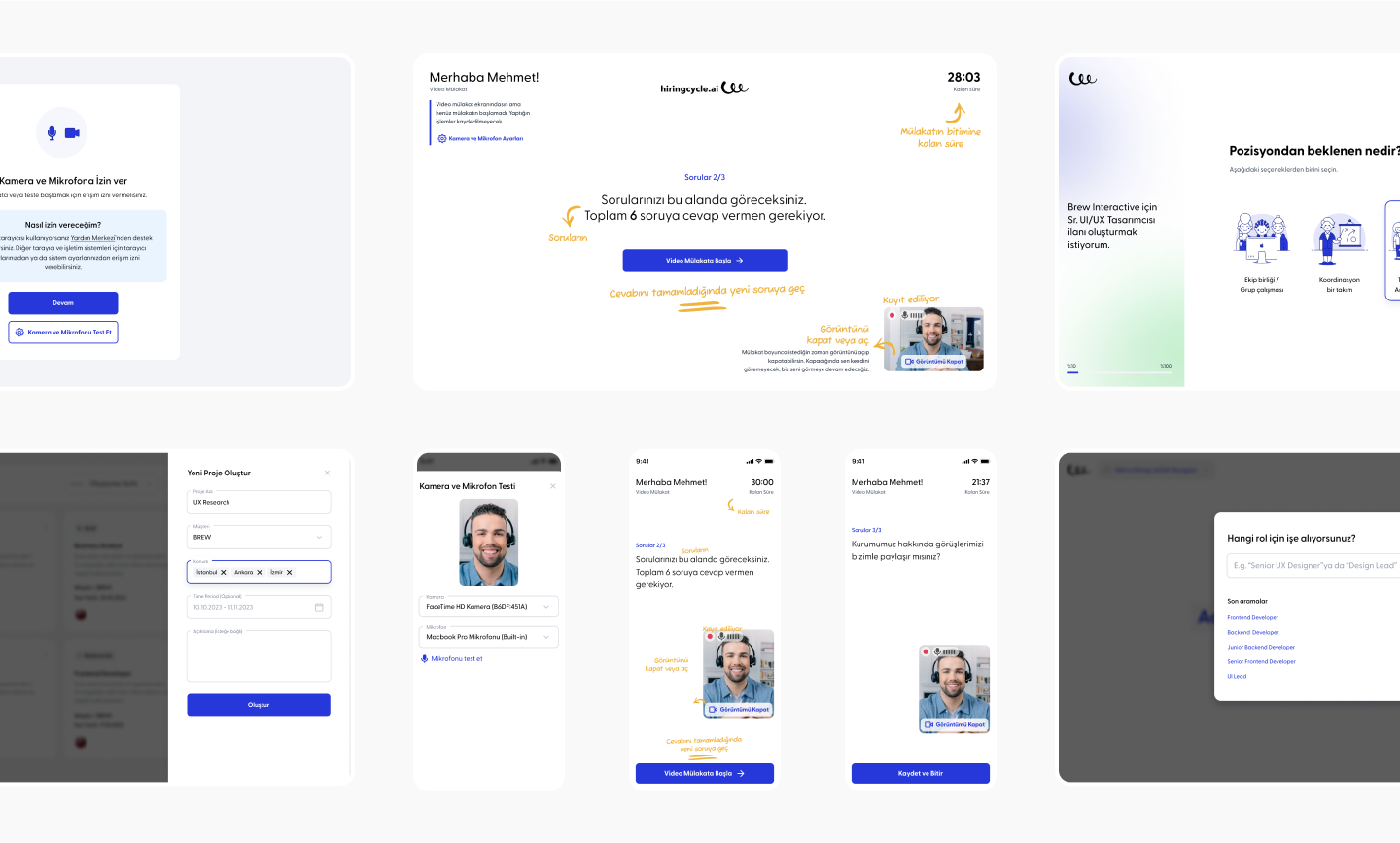

A simple and efficient usage,
unbiased equal opportunity
By blending modern NLP techniques with strong domain expertise and technical proficiency from project stakeholders, we created a unique solution. This agile approach accelerated the hiring processes, providing time and cost savings for HR teams and unbiased equal opportunities for candidates.